

Why Dogs Need Mental Stimulation Every Day
A dog can come home from a walk with tired legs and still have plenty of energy left in their mind. That is why dogs need mental stimulation alongside physical exercise. Sniffing, exploring, problem-solving and making sensible choices all help a dog feel properly satisfied - not simply worn out for an hour.
For busy Auckland households, this can be the missing piece. You may be giving your dog a loving home, a backyard and a daily trip around the block, yet still see barking, chewing, pacing or restless behaviour. These are not signs of a “bad” dog. Often, they are signs that a bright, capable dog has not had enough to do.
Why dogs need mental stimulation as well as exercise
Dogs are built to use their senses. Their noses gather an extraordinary amount of information from the ground, the wind, other dogs and the changing environment around them. Their brains are also busy working out where they are, who is nearby, what is safe and what may happen next.
A straight suburban lead walk can be valuable, especially for toilet breaks, routine and gentle exercise. But if it follows the same footpath at the same pace each day, it may not give every dog enough variety. This is particularly true for energetic breeds, young dogs, working-breed mixes and dogs left alone while their family is at work or school.
Mental enrichment gives dogs an appropriate outlet for natural behaviours. It can include scent work, exploring different ground surfaces, social communication with well-matched dogs, searching, learning cues and navigating new spaces. The goal is not to keep a dog constantly busy. It is to offer meaningful activity, then allow time to rest.
A mentally content dog is often easier to live with. They may settle more readily at home, be less likely to invent their own entertainment and have a calmer response to everyday frustrations. Every dog is different, though. A confident young Labrador may enjoy a busy group adventure, while a quieter older dog may prefer a slower sniff-heavy outing with more personal space.
Signs your dog may be bored or under-stimulated
Boredom does not always look dramatic. Some dogs become noisy or destructive, but others simply shadow their owner, stare out the window, sleep all day and then become unsettled in the evening.
Watch for changes rather than judging one behaviour on its own. A dog that occasionally steals a sock is being a dog. A dog that repeatedly chews furniture, digs through the garden, raids the rubbish or barks at every passing sound may be asking for more support, activity or training.
Common signs can include:
persistent barking, whining or attention-seeking
chewing, digging or destroying household items
pacing, difficulty settling or late-day bursts of energy
pulling hard on walks because everything feels urgent
overexcitement around visitors, dogs or routine outings
repeatedly nudging toys at you, then losing interest quickly
These behaviours can also have other causes. Pain, anxiety, a sudden change in routine, poor sleep or medical concerns can affect behaviour too. If your dog’s behaviour changes suddenly or seems out of character, speak with your vet before assuming boredom is the whole story.
What meaningful stimulation looks like
The best enrichment is not always the fanciest toy or the longest activity. It is an experience that suits the dog in front of you. A food-motivated dog might enjoy finding part of their breakfast in the garden. A scent-driven dog may get real pleasure from taking their time along a new trail. A social dog may thrive with safe, supervised play and movement alongside compatible companions.
Novelty helps, but it does not have to mean constant change. Dogs also benefit from predictable routines, particularly if they are naturally sensitive or easily overwhelmed. A familiar adventure route with changing smells, weather, terrain and dog interactions can offer plenty for the brain without making the day feel chaotic.
Choice matters too. When safe to do so, allowing a dog to choose which scent to investigate or where to pause gives them a little agency. That can be far more fulfilling than being hurried from one place to the next.
Simple ways to add enrichment at home
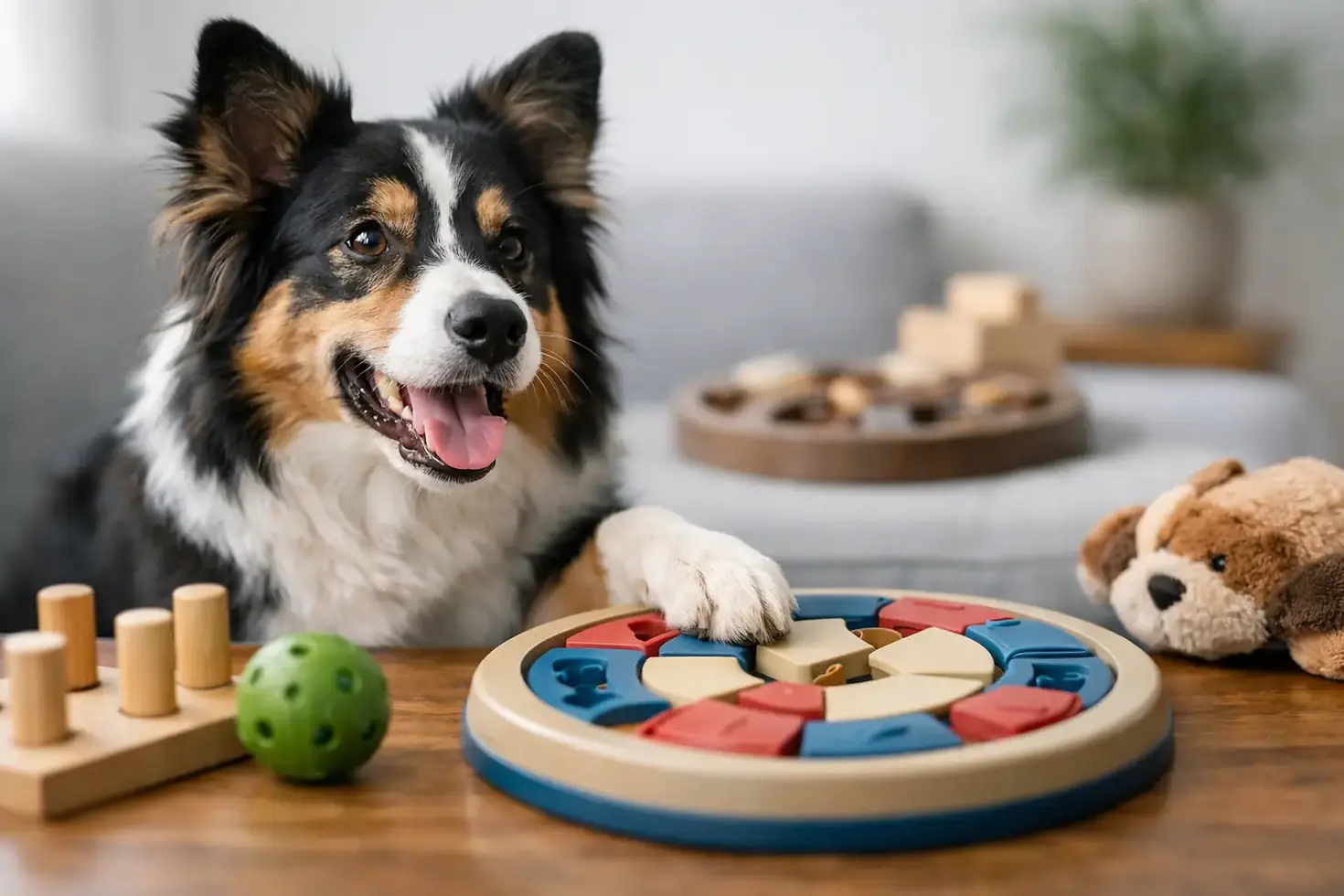
Small changes can make a genuine difference, even on a busy weekday morning. Rather than serving every meal from a bowl, set aside a few minutes for your dog to work for part of it. Scatter dry food across the lawn, use a suitable food puzzle or hide a few treats around one room for a simple search game.
You can also rotate toys instead of leaving every toy out all the time. Bringing out two or three different options can make them feel fresh again. Choose durable, dog-safe items that suit your dog’s chewing style, and supervise anything that could be torn apart or swallowed.
Short training sessions are another useful outlet. Practise a calm wait at the door, a hand target, a recall game in the garden or settling on a mat while family life carries on around them. Keep sessions brief, rewarding and achievable. Five focused minutes is more useful than twenty minutes when either of you is frustrated.
For many dogs, sniffing is the most underrated activity of all. Letting your dog stop and investigate on an appropriate walk is not wasting time. It is part of the point. Of course, there are moments when you need to keep moving - school runs, rain, work calls and a schedule are real life. That is where regular, purpose-built enrichment outings can take some pressure off.
Why outdoor adventure supports a happier dog
Outdoor spaces offer the kind of changing sensory information that homes and pavement simply cannot replicate. Natural smells, uneven terrain, open room to move and opportunities for supervised social interaction engage dogs in ways that feel instinctive.
A safe group walk is not just a chance to run. Dogs are reading body language, practising social skills, adjusting their movement around others and exploring together. With experienced supervision and suitable group matching, this can build confidence while giving dogs an outlet for their energy.
It is not the right setting for every dog on every day. Dogs recovering from injury, dogs who are unwell, or dogs struggling with fear or reactivity may need a more tailored approach. Good care means recognising when a dog needs space, a quieter walk or support from a qualified behaviour professional.
For dogs who enjoy company and adventure, a private outdoor environment can be a game-changer. Becky’s Dog Walking gives local dogs the chance to explore an exclusive 11-acre all-weather adventure park with supervised pack walks, while pickup and drop-off helps busy owners keep that routine consistent.
A tired dog is not always a fulfilled dog
It can be tempting to focus only on physical tiredness. More ball throwing, longer runs and faster walks may seem like the obvious answer to a lively dog. Yet constant high-intensity exercise can create a dog who gets fitter without becoming calmer.
Balance is the better aim. Physical exercise supports health, strength and sleep. Mental stimulation supports focus, confidence and emotional wellbeing. Rest then allows the dog’s nervous system to recover. A good day may include a walk, a sniff, a little training, a chew and a proper nap.
This balance changes with age and temperament. Puppies need carefully managed experiences rather than endless activity. Adolescents often need help learning self-control. Senior dogs may move more slowly but still enjoy scent games, gentle exploration and simple training that keeps their minds engaged.
Making enrichment part of your weekly routine
Consistency usually matters more than perfection. You do not need to create a new activity every day or turn home life into an obstacle course. Start by looking at the parts of the week where your dog is most likely to become restless: long workdays, wet afternoons, school-holiday disruptions or evenings when everyone is exhausted.
Then build practical support around those moments. Perhaps breakfast becomes a search game twice a week. Perhaps one walk each weekend is slower and more scent-led. Perhaps regular adventure walks provide the outdoor exploration and social time that is difficult to fit around work commitments.
Pay attention to the result. A well-stimulated dog is not necessarily silent or sleepy every minute of the day. They are more likely to come home able to relax, enjoy family time and settle into the rhythm of the household. Giving your dog chances to use their brain is one of the kindest ways to let them be a dog - curious, capable and happily content.


Comments