


How to Tire Out Dogs Without Overdoing It
- vince709
- May 18
- 6 min read
A dog that’s been pacing the hallway at 5:30 pm, stealing socks, barking at the fence and launching off the couch usually isn’t being naughty for the sake of it. More often, they’re under-stimulated. If you’re wondering how to tire out dogs in a way that actually helps behaviour, the answer is usually more than just a longer walk around the block.
Most dogs need a mix of physical exercise, mental stimulation, sniffing, variety and rest. When one of those pieces is missing, you often see it at home. That extra edge, the zoomies at the wrong time, the inability to settle, the chewing, the constant shadowing. A tired dog is not just physically worn out. They’re fulfilled.
How to tire out dogs in a way that works
The biggest mistake owners make is assuming every dog needs to be run harder. Sometimes that helps. Sometimes it creates a fitter dog with even more stamina and no better off-switch. The better approach is to look at what kind of tired your dog needs.
A young working-breed dog may need vigorous movement and a job to do. A sociable dog may come home more settled after supervised group exercise than after a solo lead walk. A nervous dog might be mentally exhausted by a new environment and need less intensity, not more. Age, breed, confidence, fitness and temperament all matter.
That’s why a quick lap of the streets doesn’t always touch the sides. Repetitive pavement walking on a short lead can burn a bit of energy, but it often doesn’t give dogs enough freedom to sniff, explore, problem-solve or move naturally. For many dogs, enrichment is the missing piece.
Exercise alone is only half the job
Physical exercise matters, but mental work often tires dogs out faster. Ten minutes of focused scent work can leave some dogs more settled than a much longer suburban walk. That’s because sniffing, searching and processing the environment takes real effort.
Letting your dog use their nose is one of the simplest ways to help them wind down. Scatter feeding on the lawn, hiding treats around the house, or asking them to find a toy can all add useful mental load. It doesn’t need to be fancy. It just needs to engage them.
Training helps too, especially for clever dogs who are busy in the head. Short sessions practising recall, waiting at doors, place training or polite greetings can be surprisingly tiring. The key is keeping it clear and rewarding, not drilling until your dog switches off.
There is a trade-off here. High-arousal games like endless ball throwing can create excitement without much calm. Some dogs love it, but for others it can build obsession and make them more revved up afterwards. If your dog struggles to settle, mix chase games with sniffing, wandering, food puzzles and decompression time.
The role of sniffing, exploring and choice
Dogs experience the world through scent first. When they have opportunities to sniff properly, choose where they go, and interact with varied ground, smells and spaces, they tend to come home more satisfied.
That’s one reason open, natural environments can make such a difference. Grass, trees, different textures, social cues from other dogs, room to move, and the chance to behave like a dog all add up. It’s not just exercise. It’s enrichment layered into movement.
For busy owners, this is often the part that’s hardest to provide consistently during the work week. You may have time for a lead walk before work, but not for an hour of varied stimulation in a safe space. That gap is often why dogs seem fine on paper but still restless at home.
The best ways to tire out dogs at home
On days when life is full, home-based enrichment can help take the edge off. It won’t always replace proper exercise, but it can make a real dent in your dog’s energy levels.
Food is an easy place to start. Instead of serving every meal in a bowl, use part of it for enrichment. Snuffle mats, frozen stuffed toys, slow feeders and scatter feeding all make your dog work for dinner. That taps into natural foraging behaviour and slows them down in a good way.
Short training sessions are another reliable option. Five minutes here and there is enough. Practise touch, mat work, stays, loose-lead skills in the driveway, or calm settling while the family moves around. Dogs don’t need marathon sessions. They need consistency.
Indoor games can help during wet weather too. Hide-and-seek, finding treats in cardboard boxes, or asking your dog to search different rooms gives them a mental workout without much space. Older dogs or dogs recovering from injury often benefit from this kind of lower-impact activity.
If your dog still seems wired after these games, that’s useful information. It may mean they need more movement, more social interaction, more variety, or a better routine overall.
Why routine matters more than a big weekend walk
Many owners try to make up for a quiet week with one huge outing on Saturday. It’s understandable, but dogs usually do better with regular, structured activity than occasional blowouts.
A predictable rhythm helps dogs settle. When they know they’ll have proper exercise, sniff time and stimulation through the week, they’re less likely to store up energy and frustration. It also helps with behaviour. Dogs who are regularly fulfilled are often calmer, more responsive and easier to live with.
This is especially true for households juggling work, school runs and full calendars. You don’t need to feel guilty if you can’t provide an adventure every day yourself. What matters is building a routine that meets your dog’s needs consistently.
Social dogs often tire out differently
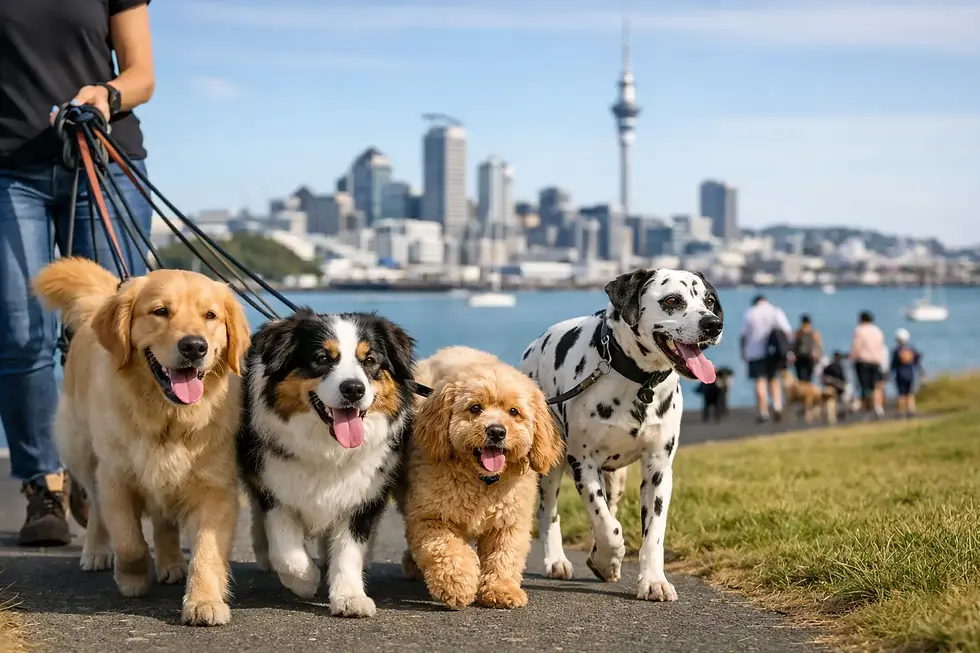
Some dogs are deeply fulfilled by safe, well-managed interaction with other dogs. Not chaotic dog-park energy, but structured group movement with experienced supervision. That combination of exercise, social communication and environmental enrichment can leave dogs pleasantly spent in a way that a solo street walk often does not.
It depends on the dog, of course. Not every dog wants a group setting, and some need careful matching. But for many friendly household dogs, pack-style adventure walks are incredibly effective because they engage the whole dog - body, brain and social instincts.
That’s where expert handling matters. Group exercise should never be a free-for-all. Good supervision, safe transport, suitable dog mixes and secure space all make the difference between a valuable outing and an overwhelming one.
Signs your dog is tired in the right way
A well-exercised dog doesn’t always collapse dramatically the second they get home. Healthy tiredness usually looks calmer than that. Your dog may drink, have a wander, then settle more easily than usual. They’re less edgy, less clingy and less likely to seek out trouble.
The wrong kind of tired can look different. If your dog is overtired, over-aroused or physically pushed too hard, you may see crankiness, sore movement, inability to switch off or an even bigger burst of wild behaviour later on. More is not always better.
Puppies, senior dogs and brachycephalic breeds need extra care here. So do dogs building fitness after a sedentary patch. The goal is not to flatten them. The goal is to meet their needs so they feel content.
When your dog needs more than you can fit into the day
For a lot of Auckland owners, the challenge isn’t knowing what their dog needs. It’s fitting it around work, traffic, school pickups and everything else. That’s often when behaviour starts to slide, not because you don’t care, but because weekdays are busy and suburban walks don’t always give enough back.
If that sounds familiar, support can make a genuine difference. A professionally managed adventure walk, especially in a secure private space with transport included, can give dogs the variety, movement and stimulation that’s hard to recreate between meetings. For many families, it turns evenings from frantic to settled.
At Becky’s Dog Walking, that’s exactly why the adventure park model works so well. Dogs get room to move, natural enrichment, supervised social time and a proper outing that leaves them happy and satisfyingly tired.
Start with what your dog actually needs
If you’re working out how to tire out dogs more effectively, start by watching the dog in front of you. Are they under-exercised, under-enriched, under-socialised, or simply lacking routine? The answer shapes what will work.
Some dogs need a solid run. Some need a sniff-heavy adventure. Some need training games and calmer structure at home. Most need a combination. Once you get that mix right, you usually see the difference quickly - not just in their energy levels, but in how peacefully they fit into family life.
A good day for a dog doesn’t have to mean non-stop action. It means enough movement, enough stimulation, enough freedom to be a dog, and enough support to come home settled.


Comments