

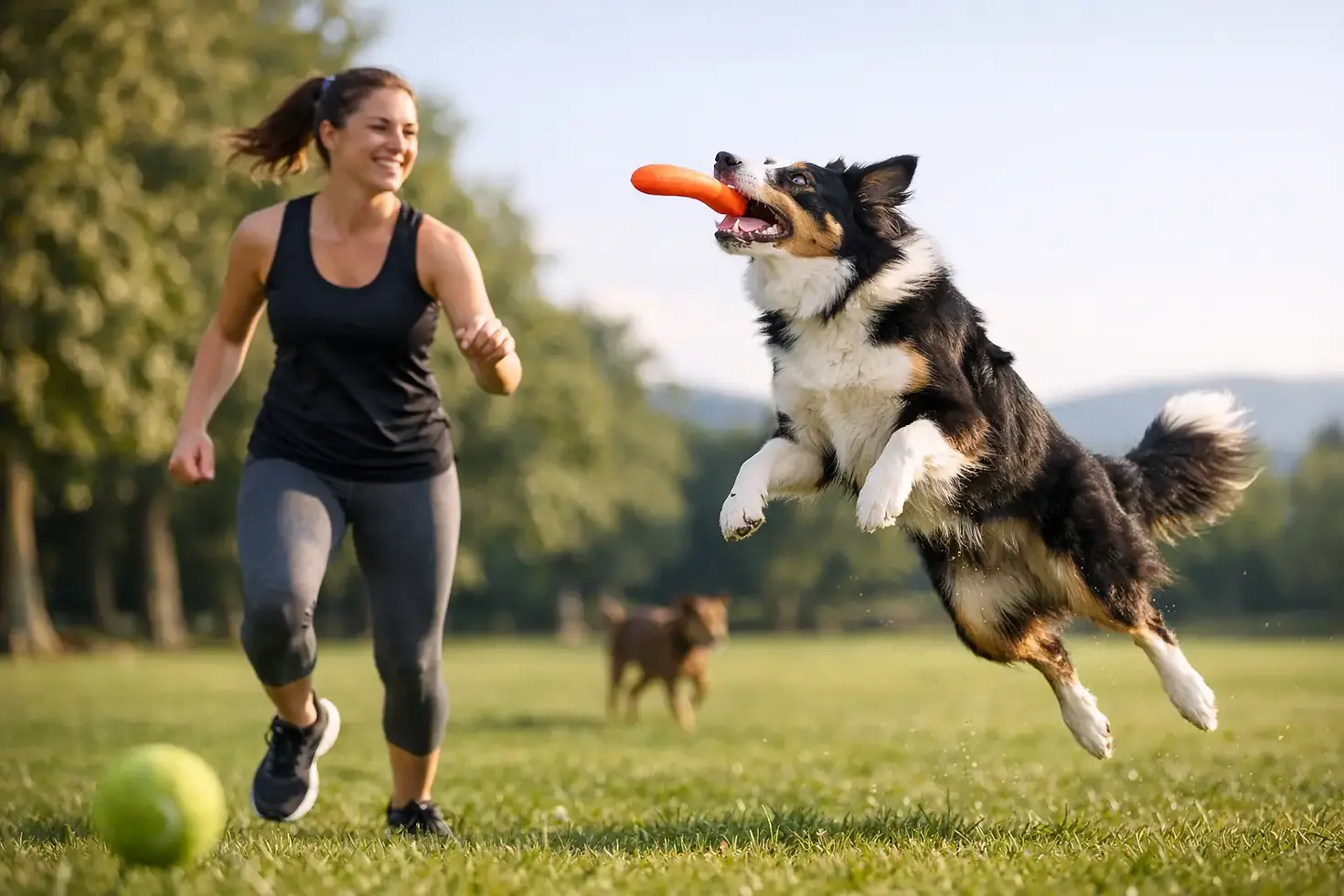
Exercise for High Energy Dogs That Works
If your dog is bouncing off the walls by 5 pm, stealing shoes, pestering the kids, or doing laps of the lounge, the problem often is not simply “more walking”. The right exercise for high energy dogs needs to burn physical energy, engage the brain, and give them a healthy outlet for natural dog behaviour.
That matters even more in busy Auckland households. When you are juggling work, school runs, traffic, and everything else, it is easy to assume a quick walk round the block should be enough. For many dogs, especially young, social, active breeds, it rarely is. They need movement with purpose, novelty, space, and structure.
What high energy dogs actually need
A high energy dog is not necessarily a “naughty” dog. Quite often, they are underworked, under-stimulated, or stuck in a routine that does not match what their body and brain are built for. Labradors, Spaniels, Huntaways, Collies, Pointers, Vizslas, Staffies and plenty of mixed breeds can all fall into this category, but breed is only part of the picture. Age, temperament, fitness, confidence and home routine all play a role.
Good exercise is not just about distance. A long lead walk on the same suburban footpath every day can help, but it may not satisfy a dog that wants to sniff, explore, run, problem-solve and interact. On the other hand, endless ball throwing can create a super-fit dog who still struggles to switch off. The sweet spot is a mix of cardio, enrichment and calm structure.
That is why the best results usually come from asking a better question. Not “How long did my dog walk?” but “What did that outing actually give them?”
The best exercise for high energy dogs is varied
Dogs thrive when exercise feels meaningful. Space to move freely, different scents, uneven ground, supervised play, and time with other suitable dogs can all make a bigger difference than another lap of the streets.
Free running in a safe environment is especially valuable. It allows dogs to stretch out properly, change pace, practise social skills, and make choices. That freedom, when managed well, often leaves them more settled than a tightly controlled walk of the same length.
Social exercise can also be powerful, but only when it is done properly. Not every dog park is a good fit, and not every dog enjoys every dog. The goal is not chaos. It is safe, balanced interaction with close supervision and enough space for dogs to move away, reset and explore. When that happens, exercise becomes more than physical output. It becomes enrichment.
Why a quick neighbourhood walk is not always enough
For some dogs, a local walk is perfectly fine. For others, it is the canine version of pacing a hallway. They see the same driveways, smell the same spots, and spend much of the outing being redirected away from distractions. That can lead to frustration rather than satisfaction.
This is where owners often get stuck. They are trying hard, but the dog still comes home wired. Then the evening becomes a cycle of barking, jumping, scavenging, mouthing or restlessness. It can feel like your dog has endless energy, when really they have unmet needs.
A more stimulating outing often changes the picture. Open space, natural surfaces, new scents, and proper movement give the dog a chance to be a dog. You are not just draining the tank. You are filling the right needs.
Physical exercise without mental work can backfire
One of the biggest mistakes with high energy dogs is treating them like athletes only. If all they get is speed and repetition, they can become fitter without becoming calmer. You may end up with a dog who needs more and more effort just to feel tired.
Mental enrichment helps balance this. Sniffing, navigating terrain, social reading, recall work, and exploring a changing environment all ask the brain to engage. That kind of exercise is quietly exhausting in the best way.
This is also why structured group walks can be so effective. A dog is not only moving. They are reading other dogs, responding to guidance, adapting to the environment, and using their senses the whole time. It is a richer experience than simply marching beside a pram or sniffing the same letterbox.
Signs your dog needs better exercise, not just more exercise
Some dogs make it obvious. Others look “fine” until small issues become habits. If your dog settles poorly at home, pesters constantly for attention, destroys toys in minutes, pulls hard on lead, reacts out of frustration, or seems unable to switch off, it is worth looking at the quality of their exercise routine.
Dogs who are under-stimulated can also become clingy or vocal. Some start digging in the garden. Some raid the rubbish. Some bounce from one room to the next looking for trouble. These behaviours are often communication, not stubbornness.
Of course, behaviour can have other causes too. Pain, anxiety, adolescence, and inconsistent routines all matter. But very often, improved exercise and enrichment are part of the fix.
A routine that works for real life
Most owners do not need a complicated plan. They need something realistic and repeatable. The best routine is one you can actually maintain through work weeks, wet weather and winter.
For many families, that means combining shorter owner-led interaction at home with one or more bigger exercise sessions during the week. A sniffy morning wander, a food puzzle, some recall games in the garden, and a proper adventure walk on workdays can do far more than relying on one rushed outing when everyone is already tired.
This is where convenience matters. If your dog needs quality weekday exercise but your schedule does not allow for it, support can make all the difference. A structured pickup and drop-off service removes the logistics while making sure your dog still gets the movement, stimulation and supervision they need.
What to look for in exercise services for high energy dogs
If you are considering extra help, look beyond the words “dog walking”. Ask what the dog’s experience is actually like. Is it a short suburban stroll, or a proper adventure? Is the environment secure and suitable in wet weather? Are dogs grouped thoughtfully? Is supervision experienced and hands-on?
The setting matters. So does the handler’s judgement. A well-managed private space is very different from an unpredictable public area. Dogs can move more naturally, social interactions can be monitored closely, and the whole outing can be built around enrichment rather than simply covering distance.
For Auckland owners, this can be particularly helpful in winter or during packed work weeks. A dependable service with transport included means your dog does not miss out just because your day got away on you.
Exercise for high energy dogs in different life stages
Puppies and adolescents often have bursts of energy, but that does not mean they need relentless hard exercise. They need age-appropriate movement, short training sessions, confidence building and good social experiences. Too much impact or over-arousal can be unhelpful.
Adult dogs usually cope well with more challenging outings, provided fitness is built sensibly. This is the stage where regular adventure walks, off-lead movement in safe areas, and structured group exercise can really shine.
Older dogs can still be surprisingly energetic, but their needs shift. They may benefit more from gentle exploration, softer surfaces and controlled social time than full-on sessions. Good exercise should support the dog in front of you, not a generic idea of what “active” looks like.
When tired is not the same as fulfilled
A dog can be physically exhausted and still not feel settled. That is why fulfilment matters. Dogs need chances to sniff, explore, interact, move naturally and feel competent in the world. When those needs are met consistently, home life often becomes easier for everyone.
You may notice better rest, calmer greetings, less destructive behaviour and fewer attention-seeking antics. Not because the dog has been worn down, but because they have had a proper outlet.
At Becky’s Dog Walking, that is exactly why structured Adventure Pack Walks in a private 11-acre all-weather dog park work so well for many local dogs. They offer more than a lead walk. They give dogs room to run, socialise, explore and come home content.
If your dog seems to have endless energy, the answer is rarely to just keep doing more of the same. Better exercise for high energy dogs is about the right kind of movement, in the right environment, with the right support - and that can change the feel of your whole household.


Comments