

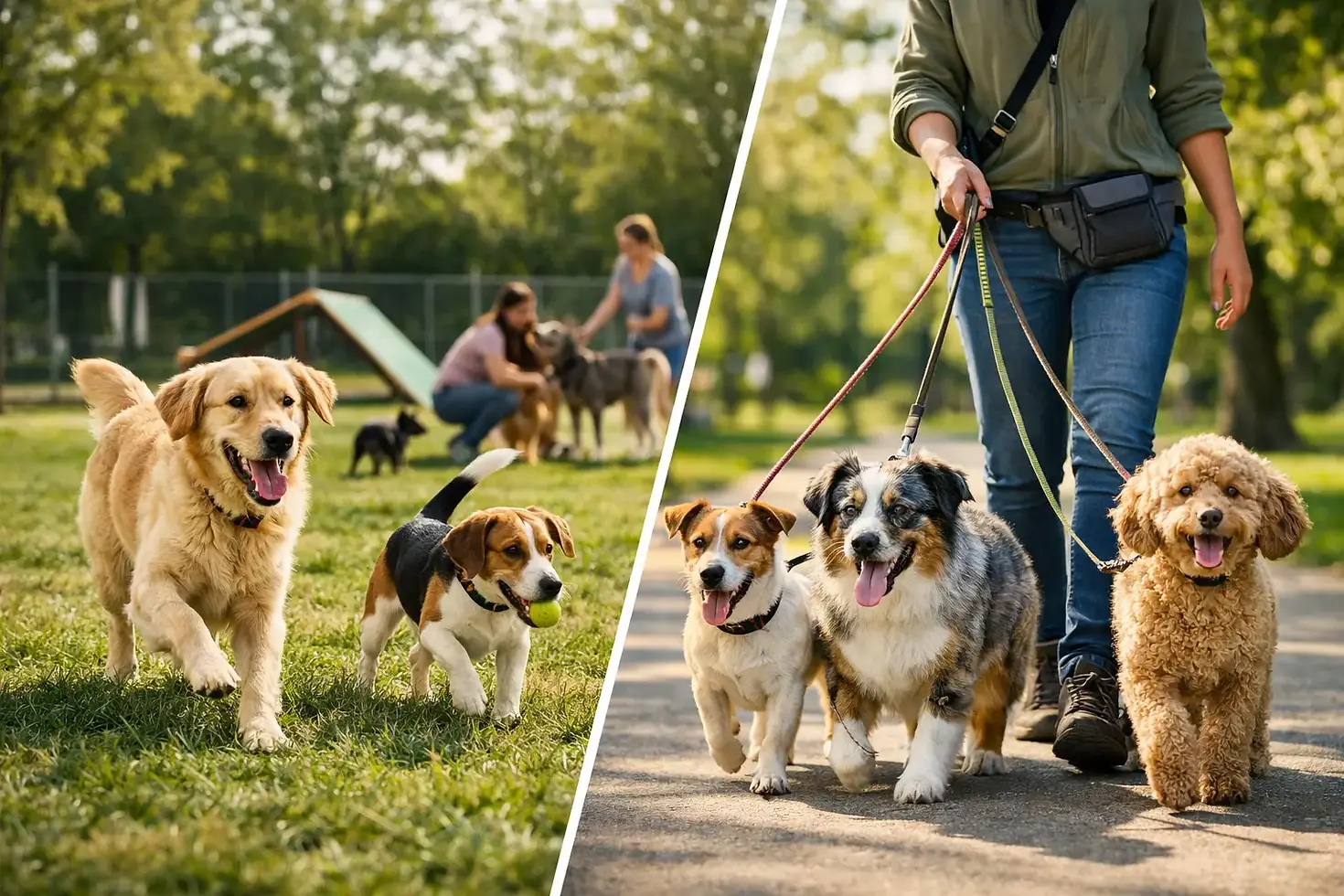
Dog Park or Dog Walker: What Suits Your Dog?
A tired dog is often a happier dog, but getting there can look very different from one household to the next. When weighing up a dog park or dog walker, the best choice is not simply about what is closest or cheapest. It is about your dog’s temperament, the quality of supervision, the exercise they actually receive and what fits reliably into your week.
For busy Auckland families and professionals, a public park visit can be a lovely part of life with a dog. A professional walking service can also give your dog something many quick after-work outings cannot: regular, purposeful exercise, natural enrichment and experienced handling while you get on with the day.
Dog park or dog walker: start with your dog
Dogs are individuals. Some bound into a social setting with confidence, ready to chase, sniff and make friends. Others need more space, slower introductions or careful guidance around unfamiliar dogs. Age, breed, health, training history and energy level all matter.
A young, active dog may need far more than a short loop around the block. A senior dog may still benefit enormously from gentle movement, fresh air and company, but at a pace that protects ageing joints. A dog that becomes overwhelmed in busy places may not enjoy a crowded public dog park, even if they look excitable when the lead comes out.
This is where the difference between an unstructured outing and a professionally managed walk becomes clear. At a public park, you are responsible for reading the environment, assessing other dogs and deciding when it is time to leave. With the right dog walker, your dog is handled by someone who understands canine body language and group dynamics, and who can match the experience to their needs.
What a public dog park can offer
Public dog parks can be a good option for confident, social dogs when you have the time to go and the park is calm. They offer variety, new smells and room to move beyond the footpath. They can also be a great way for owners to spend active time with their dog.
The trade-off is that public spaces are unpredictable. You may arrive to find no suitable playmates, an overcrowded enclosure, muddy ground or dogs with play styles that do not suit your own. Not every owner watches their dog closely, and not every dog is ready for off-lead social play. A quick visit can become more stressful than enriching when the environment is too busy or poorly matched.
Weather can be another practical hurdle. After a wet Auckland week, some parks are slippery, boggy or unpleasant for both dogs and people. If you are already juggling school runs, meetings and dinner, it is easy for the planned park trip to become tomorrow’s plan instead.
That does not make public parks a bad choice. For many dogs, they are a valuable extra. The question is whether they provide the consistent weekday exercise and stimulation your dog needs, particularly when life gets busy.
What a dog walker brings to the routine
A professional dog walker does more than take a dog from A to B. A quality service creates a dependable rhythm: collection, safe transport, supervised exercise, social interaction where appropriate and a settled trip home. For dogs that thrive on routine, that consistency can make a noticeable difference.
Regular outings help give energetic dogs an appropriate outlet. They also provide the everyday experiences that keep a dog mentally engaged: following scents, moving through varied terrain, exploring open space and learning to be calm within a well-managed group. Physical exercise matters, but the sniffing, problem-solving and social learning are often what leave a dog properly satisfied.
For owners, the benefit is peace of mind. You do not have to rush home at lunchtime or feel guilty when a long workday runs over. Your dog has had their needs considered before you walk through the door, which can make evenings calmer and more enjoyable for everyone.
Of course, dog walking services vary. A short pavement walk with several dogs is not the same as a carefully supervised adventure in a secure, spacious environment. Ask where dogs exercise, how groups are selected, what transport arrangements are in place and how the walker handles recalls, rest breaks and changing weather.
The value of a private adventure park
A private dog park used by a professional walking service combines some of the best parts of both options. Dogs get space to run, explore and socialise, while their time is overseen by experienced handlers rather than relying on whoever happens to be at a public park that day.
At Becky’s Dog Walking, Adventure Pack Walks take place at an exclusive 11-acre, all-weather dog adventure park. The Auckland Council-consented space gives dogs room for natural, off-lead-style enrichment in a controlled setting, without the uncertainty of a busy public enclosure. Pickup and drop-off are included across West Auckland, North Shore and North West Auckland, so the adventure can fit around your workday rather than adding another task to it.
The private setting is especially useful for dogs that need a little more than a standard suburban lead walk. Open ground, changing scents, group interaction and professional supervision provide a fuller experience, while the structured routine helps dogs settle into the day with confidence.
Safety is more than a fenced gate
Many owners understandably see fencing as the main safety feature of a dog park. It matters, but it is only one part of the picture. Safe dog exercise also depends on attentive supervision, suitable group sizes, dogs being assessed for compatibility and a handler who notices early signs of discomfort or over-arousal.
Watch a group of dogs closely and you will see plenty of quiet communication: a turned head, a pause, a tucked tail, a play bow, a dog choosing to step away. An experienced handler does not wait for a situation to become a scuffle. They manage energy, create space and support positive interactions before tension builds.
For this reason, a dog walker can be the better choice for dogs that are social but still developing confidence, have inconsistent recall or need their play moderated. On the other hand, a dog with significant reactivity or health concerns may need an individual plan rather than a group walk. Honest assessment is a sign of good care, not a rejection.
How to choose the right option for your household
The best decision often comes down to what you can maintain consistently. A public park may suit you if you enjoy going with your dog several times a week, can choose quieter times and feel confident managing off-lead interactions. It can remain a wonderful shared activity even when you use a dog walker during the week.
A professional walking service may be the stronger fit if your dog spends long weekdays at home, has energy to burn, or needs more variety than the usual neighbourhood route offers. It is also practical when your schedule changes often, you are managing family commitments or you simply want your dog to have a richer day while you are at work.
Before booking any service, look for clear answers about these essentials:
How dogs are matched for age, size, confidence and play style.
Whether pickup, transport and return home are handled safely and reliably.
Where dogs exercise in wet weather and how long they are actively out and about.
Who supervises the group and what dog-handling experience they bring.
Trust your observations after the first few outings as well. A good routine should leave your dog content and pleasantly tired, not anxious, sore or overstimulated. You may notice calmer behaviour at home, better settling in the evening and the unmistakable excitement that appears when they recognise their walking day has arrived.
A better week can include both
This does not have to be a strict either-or decision. A dog walker can provide reliable weekday exercise and social enrichment, while your family visits a public dog park on the weekend for shared playtime. One supports your dog’s routine; the other can be a fun outing you enjoy together.
Give your dog the option that lets them move, sniff, play and rest well, week after week. The right support is the one that respects who your dog is and gives them a day worth wagging about.


Comments