


A Practical Guide to Dog Walking Safety
- vince709
- Jul 5
- 6 min read
A walk can go wrong faster than most owners expect. One slipped collar, one startled lunge, one hot footpath, or one poorly matched dog can turn a routine outing into a stressful one. That is exactly why a good guide to dog walking safety matters - not just for avoiding accidents, but for making sure your dog comes home calm, fulfilled and physically well.
For busy Auckland households, safety is not only about what happens on the lead. It includes the route, the weather, the dog’s temperament, the gear, the transport, and the person handling the walk. A safe dog walk should feel structured, supervised and suited to the dog in front of you, not rushed or left to chance.
What dog walking safety really means
When people think about dog walking safety, they often picture traffic or lead control. Those matter, of course, but safety is broader than that. A genuinely safe walk protects your dog physically, supports good behaviour, and reduces stress before, during and after the outing.
That means looking at the full picture. A young, social dog may thrive in a well-managed group setting with room to move, while an older dog may need a slower pace and steadier footing. A confident dog can still make poor choices when overstimulated. A friendly dog may not be comfortable with every dog it meets. Safety always depends on context.
The best walks are not simply long walks. They are well-planned walks, with the right environment, the right supervision and the right level of stimulation.
Start with the right gear and fit
Before the walk even begins, check the basics. A collar or harness should fit properly - snug enough that your dog cannot back out, but not so tight that it rubs or restricts movement. If you need to adjust it often, it may not be the right option for your dog.
Leads matter too. In most suburban settings, a standard lead gives better control than a retractable one. Retractable leads can create slack at the wrong moment, encourage pulling, and make it harder to react near roads, driveways or other dogs. They are not automatically unsafe, but they do leave less room for quick handling when conditions change.
ID tags should be current and easy to read. If your dog is microchipped, make sure the contact details are actually up to date. That small admin job becomes very important if a dog slips free.
A guide to dog walking safety on Auckland streets
Street walking brings its own risks, especially in busy suburbs and during school run hours. Dogs can be unsettled by scooters, prams, noisy trucks, loose dogs, lawn equipment and sudden movement from driveways. Even a dog that walks beautifully most days can react if something catches it off guard.
Choose routes with good visibility where possible. Narrow footpaths, blind corners and busy crossings all increase pressure on both the dog and the handler. If your dog is still learning lead manners or tends to react, a quieter route is often the safer one, even if it is less convenient.
Footpath temperature is another issue owners can overlook. On warm days, paved surfaces heat up quickly. If it feels too hot for your hand, it is too hot for paws. Early morning outings, shaded areas and grass underfoot can make a big difference in summer.
Then there is rubbish. Food scraps, chicken bones, used tissues and mystery leftovers can all end up on the ground. Some dogs are quick scavengers, so safety includes watching what is ahead and not relying on a late correction.
Not every dog is suited to every walk
One of the most common safety mistakes is assuming all exercise is good exercise. The truth is more specific than that. Dogs need the kind of exercise that matches their age, health, confidence and social skills.
A high-energy dog usually needs more than a short loop around the block, but more stimulation should not mean chaos. The goal is healthy outlet, not sensory overload. Likewise, nervous dogs do not always benefit from being pushed into busy public spaces where they cannot relax.
This is where experience matters. Reading body language, pacing the walk properly, and knowing when to create space are all part of keeping dogs safe. Yawning, lip licking, scanning, freezing, pulling away, barging forward - these can all tell you something before a bigger reaction happens.
Group walks can be excellent - when they are managed properly
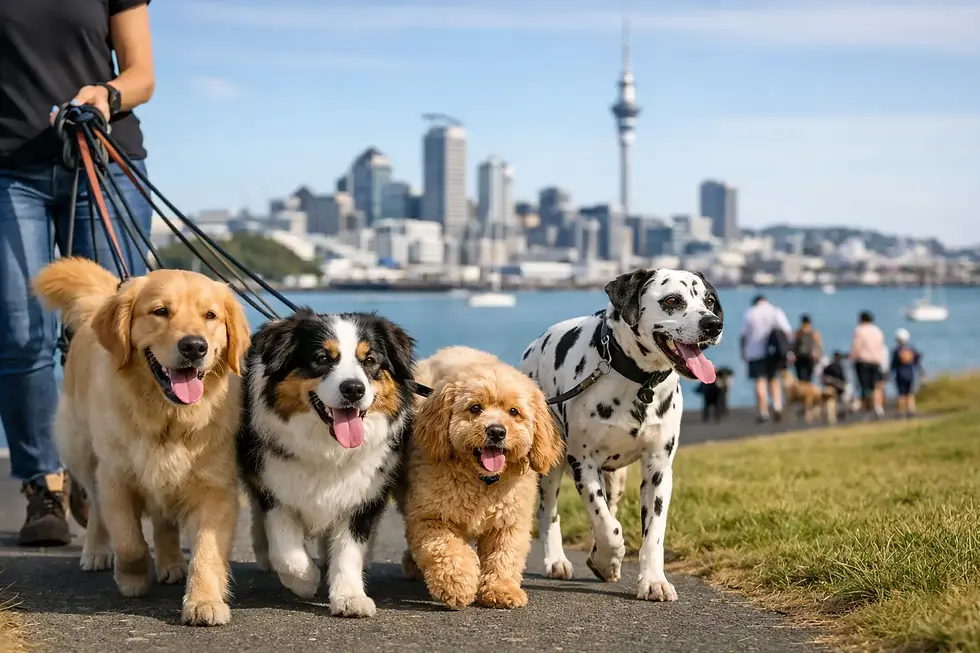
A well-run group walk offers real benefits. Dogs often enjoy the movement, social contact and enrichment that come from being with other suitable dogs in a structured setting. For many owners, it is also one of the best ways to make sure their dog gets regular weekday exercise when life is full.
But group walking is not safe simply because dogs are together. It works when the dogs are matched thoughtfully, the handler is attentive, and the environment supports good decisions. Too many dogs, poor supervision, unsuitable personalities or cramped public spaces can tip things the wrong way.
This is why private space can make such a difference. A secure, purpose-suited area gives dogs room to move naturally without the same level of traffic, unpredictable off-lead encounters or suburban pressure points. It also allows for more controlled introductions and better oversight. At Becky’s Dog Walking, that dog-centred approach is part of why private adventure park walks suit many household dogs better than a standard street loop.
Transport safety is part of the walk
If your dog is being picked up for walks, transport should never be treated as an afterthought. Safe handling starts at the gate and continues right through to drop-off.
Dogs should be loaded and unloaded calmly, not rushed. Vehicles should be set up for dogs, with secure containment, sensible temperature control and routines that reduce excitement at entry points. This matters because transitions are often when dogs slip leads or make impulsive movements.
For owners, reliability is a safety factor too. Knowing who is collecting your dog, when they are arriving, and how your dog is being managed on the route builds trust for a reason. Consistency helps dogs settle into the routine and lowers stress around departures and returns.
Weather changes the safety picture
Auckland weather can shift quickly, and safe walking decisions need to shift with it. Heat is the most obvious concern, but wet conditions, wind and muddy footing also matter.
In hot weather, dogs can overheat far sooner than people realise, particularly brachycephalic breeds, older dogs, overweight dogs and heavy-coated dogs. Slowing the pace, using shaded areas and avoiding the hottest part of the day are sensible choices. On very warm days, a shorter, lower-intensity outing may be the better call.
Wet weather is not automatically a problem. In fact, many dogs love it. But slippery surfaces, reduced visibility and dirty runoff can all create hazards. The safest approach is not to avoid every imperfect day. It is to choose the right environment and adapt the walk to conditions.
The person on the other end of the lead matters most
Good dog walking safety is not built on luck. It comes from judgement. An experienced handler knows when a dog needs more space, when a route is too stimulating, when a social interaction should be interrupted, and when the best choice is to keep things calm and simple.
That kind of judgement is hard to fake. It comes from hands-on time with many different dogs, from understanding behaviour, and from having systems that support consistency. For owners who cannot be there during the day, that is often the biggest difference between a basic walk and quality care.
If you are choosing a dog walker, ask how they assess dogs, how they manage transport, what environment they use, and what happens if a dog is not suited to a particular group or plan. Safety should be visible in the structure of the service, not only promised in a sentence.
Safe walks should leave your dog better, not just tired
A tired dog is not always a well-walked dog. Dogs can come home exhausted because they have been overstimulated, stressed or managed poorly. What most owners really want is a dog that returns settled, satisfied and ready to rest.
That is the heart of a good guide to dog walking safety. It is not about removing all fun or wrapping dogs in cotton wool. It is about giving them the freedom to enjoy exercise, enrichment and social time in a way that is supervised, thoughtful and right for them.
When the walk is done properly, your dog gets to be a dog - with the safety, structure and care they need to enjoy it.


Comments